What Is a Cold Wallet Vs Hot Wallet
Clear breakdown of what is a cold wallet vs hot wallet, key risks, and how retail traders pick storage when using Telegram crypto bots.
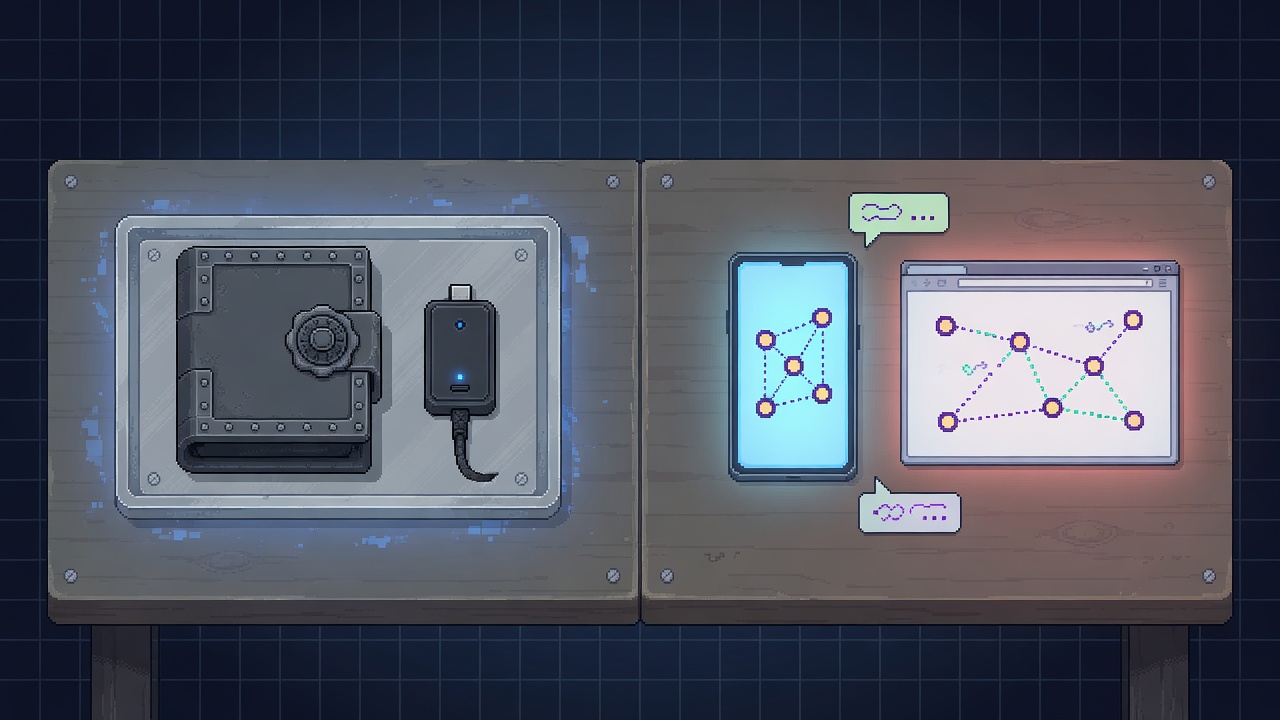
A cold wallet keeps your private keys offline. A hot wallet keeps them on a device or app that can reach the internet. That is the core of what is a cold wallet vs hot wallet: connectivity and attack surface, not which brand logo looks cooler.
If you trade from Telegram bots, fund snipers, or park size after a run, this split decides how much you can lose to a drained key, a fake dApp prompt, or a compromised phone. This guide stays practical. No guaranteed returns talk. Not financial advice. Trading and holding crypto involve risk of loss.
What Is a Cold Wallet Vs Hot Wallet
Hot wallet: software or hardware that signs transactions while connected (or easily connectable) to the network. Examples in daily use include browser extensions, mobile wallets, exchange accounts, and many bot-linked signing flows. Keys or session material sit where malware, phishing, or a bad approval can reach them faster.
Cold wallet: storage where private keys stay offline most of the time. Classic forms are air-gapped hardware devices, offline paper or metal backups used carefully, and multisig setups where signing happens away from always-on machines. You bring the key online only long enough to approve a transaction, then return to offline custody.
Both can hold the same assets on-chain. The chain does not care. Attackers do. Hot setups win on speed and bot workflows. Cold setups win on long-term custody and lower continuous exposure.
How Hot Wallets Work in Practice
Hot wallets prioritize convenience:
- Install app or extension, create or import a seed, fund the address.
- Connect to DEXs, bridges, Telegram trading bots, and dashboards with a few clicks.
- Sign swaps, limits, snipes, and approvals without digging a device out of a drawer.
That speed is why most retail flow lives hot: meme entries, copy-trade mirrors, DCA bots, and gas top-ups. The tradeoff is continuous surface area. Phishing links, fake bot support accounts, malicious token approvals, clipboard hijacks, and infected phones all target hot keys first.
Exchange "wallets" are a special hot case. You often do not control the keys at all. You hold an IOU inside a custodial system. That can be fine for small active size. It is not self-custody. Withdrawals, freezes, and venue risk still apply.
How Cold Wallets Work in Practice
Cold wallets prioritize isolation:
- Keys generate and stay on a device or medium that does not browse the open web.
- You verify receive addresses carefully, often on the device screen itself.
- To spend, you build a transaction on a viewing machine, transfer it to the signer, approve offline or semi-offline, then broadcast the signed result.
Good cold practice includes writing the seed once on durable backup (and testing recovery), never photographing the seed, never typing the seed into a "support" chat, and keeping firmware updates from official channels only.
Cold is slower. That friction is the point when you are storing size you cannot afford to reload from zero.
Side-By-Side Comparison
| Factor | Hot wallet | Cold wallet |
|---|---|---|
| Connectivity | Online or easy online | Offline by default |
| Speed for bots and DEXs | High | Lower |
| Phishing and malware risk | Higher | Lower if process holds |
| Best fit | Active trading stack, small working capital | Savings, vault, long holds |
| Recovery | Seed or custodial reset flows | Seed or multisig ceremony |
| Typical failure mode | Approval drain, stolen device, fake bot | Physical loss, bad backup, social engineer of seed |
Neither column is "safe forever." Cold without a tested backup is a paperweight. Hot without approval hygiene is an open tab for anyone who tricks one signature.
Why Telegram Bot Users Should Care
Telegram crypto bots (snipers, limit order tools, copy bots, portfolio helpers) almost always need a hot path to sign or relay trades. That is normal. The mistake is treating the entire net worth as the bot's working wallet.
A cleaner retail pattern many traders use:
- Vault (cold): long-term bag, rarely touched.
- Hot operating wallet: only the capital you accept losing to market risk plus tool risk.
- Burner or session wallets (optional): even smaller slices for unknown contracts or experimental bots.
Fund the hot wallet from cold in planned transfers. Do not keep seed phrases in Telegram Saved Messages. Do not paste private keys into bots that ask for them in chat. Prefer flows that use standard wallet connect or documented deposit addresses you verify on a second channel.
When a bot needs permissions, read what you approve. Unlimited token allowances on junk contracts are a common drain vector on hot wallets. Revoke stale approvals on a schedule if you live in DeFi.
For rankings, setup checklists, and category context around Telegram trading tools, start from TGBot. Pair any bot choice with wallet hygiene, not hype screenshots.
Security Checklist Before You Move Size
Use this as a boring pre-flight, not a vibes check:
- Separate roles. Vault cold. Trade hot. Do not merge them because "it is only for a week."
- Verify addresses offline. Copy-paste attacks still work. Confirm on hardware screens when you can.
- Seed handling. One clear backup. No cloud photos. No "just this once" in chat.
- Device health. Phone and browser used for hot signing stay patched. Avoid random APKs and "premium bot" sideloads.
- Bot authenticity. Confirm handles and links from official project channels you already trust. Scams clone UI and support tone.
- Allowance hygiene. Prefer exact spends when the UI allows. Revoke what you no longer use.
- Test small. First deposit and first withdraw with a tiny amount. Confirm the full round trip.
- Custody honesty. If keys sit on an exchange, label that capital custodial in your own notes.
How to Choose for Your Setup
Ask job-fit questions, not identity questions:
- How often do you sign? Many times a day points hot for the active slice. Rare large moves point cold.
- What is the blast radius? Size the hot wallet so a total loss hurts and teaches, but does not end the account.
- Do you need bot speed? Snipers and fast exits need hot rails. Parking after a win can move back cold on a schedule.
- Can you run the cold process under stress? If you skip address checks when markets move, fix the process or keep less in any self-custody path until you can.
- Multisig or single seed? Higher size often deserves more than one key holder or one device class. Complexity has its own failure modes. Learn before you load.
Beginners often start with a reputable hot wallet for learning plus a hardware cold device once size grows past "tuition." Advanced users split across chains and roles. There is no single correct stack for every trader.
Common Mistakes That Drain Accounts
- Importing a cold seed into a hot app "just to check the balance," then leaving it there.
- Keeping life-changing size on the same mobile wallet that clicks Telegram deep links all day.
- Trusting a bot that DMs first and asks for seed, key, or remote desktop.
- Skipping receive tests and sending a full bag to a mistyped or poisoned address.
- Assuming hardware equals invincible while approving blind hashes on a compromised computer.
- No revocation habit after farming or mint seasons.
Fixing process beats buying another gadget you will not use correctly.
Practical Split Example (Illustrative Only)
Imagine you hold a mix of majors and small experimental bags. One workable layout:
- Cold hardware: majors and longer holds.
- Hot extension or mobile: Telegram bot trading float and gas.
- Tiny hot burner: brand-new contracts and one-off mints.
Rebalance on a calendar (for example weekly), not on every candle. The numbers are personal. The idea is role separation. This is educational structure, not a prescription or a promise of outcomes.
Conclusion
What is a cold wallet vs hot wallet comes down to whether private keys live in an online path or stay offline until you deliberately sign. Hot wallets fit active Telegram bot workflows and small operating capital. Cold wallets fit vault storage and slower, deliberate moves. Many retail traders need both, with clear size limits on anything that can click "approve" in a hurry.
Learn the tools, verify every address and bot handle, and keep risk sized to what you can lose. Not financial advice. Trading involves risk of loss. For more Telegram crypto bot rankings and practical guides, visit tgbot.com.
Not financial advice. Trading involves risk of loss.
FAQ
- Is a hardware wallet always a cold wallet?
- Usually yes when keys stay on the device and you only sign intentional transactions. If you constantly leave signing workflows exposed or import the same seed into hot apps, you weaken the cold benefit. Process matters as much as the device.
- Can I use a cold wallet with Telegram trading bots?
- Direct high-frequency bot trading almost always needs a hot operating wallet. A common pattern is keeping savings cold and funding a limited hot wallet for bots. Avoid pasting seeds or private keys into Telegram chats.
- Are exchange wallets hot or cold?
- From your side they behave like custodial hot balance: convenient, online, and not self-custodied keys. Some venues use cold storage internally for reserves, but that does not give you personal key control or remove platform risk.
- What should stay in a hot wallet?
- Only working capital for active trades, gas, and tools you accept as higher operational risk. Move size you are not actively using back to colder storage on a schedule you can actually follow.
- Does a cold wallet remove all risk?
- No. You can still lose funds to physical theft, bad backups, social engineering of your seed, blind signing on a compromised computer, or sending to the wrong address. Cold storage reduces online attack surface. It does not erase user error or market risk.
Not financial advice. Crypto trading can lose money. TGBot rankings are research aids, not guarantees. Always verify official bot links and never share your seed phrase.