How to Start Crypto With Small Money
Learn how to start crypto with small money using a simple bankroll plan, cheap on-ramps, safety checks, and Telegram bot basics. Retail-honest steps, not hype.
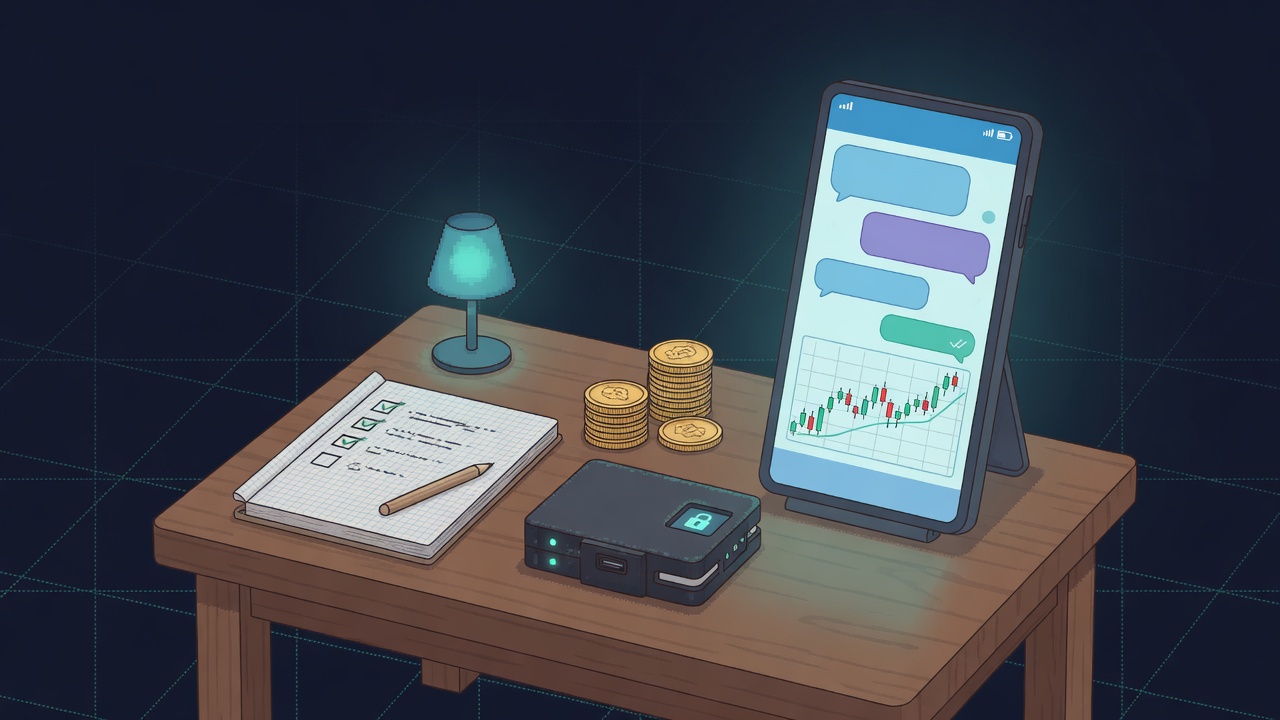
Start Small, Stay Solvent
If you want to know how to start crypto with small money, the honest answer is simple: treat a tiny bankroll like a training budget, not a lottery ticket. You do not need a large deposit to learn wallets, fees, order types, and risk. You do need a plan that keeps you from overtrading, overpaying, and clicking random Telegram links.
This guide is for retail traders who want a clean path: fund a small amount, pick one chain and one job, practice with size you can lose, and only then decide whether tools like Telegram crypto bots fit that job. Nothing here is financial advice. Crypto is volatile. You can lose what you put in.
What Small Money Actually Means
Small money is relative, but the operating rules are the same at $50, $200, or $500.
- Money you can lose without changing rent, bills, or stress levels
- Size small enough that fees do not eat every trade
- A hard monthly cap so FOMO cannot refill the account on impulse
A useful framing: your first months are tuition. You are buying experience in custody, spreads, slippage, and emotional control. If you frame early capital as profit target capital, you will force size, chase pumps, and ignore process.
Set Rules Before You Buy Anything
Write four rules on paper or in a notes app before you create accounts.
- Bankroll cap. Example: $100 to $300 total for the first 30 to 90 days. No top-ups after a loss week.
- Max loss per idea. Example: 1% to 2% of bankroll risked if a trade goes wrong. On $200, that is $2 to $4 of planned risk, not $200 all-in.
- Fee budget. Track gas, spread, and bot fees. If fees are regularly larger than your edge hypothesis, stop trading that style.
- Time box. Example: two review sessions per week, not 24/7 chart staring.
These rules matter more than coin picks. Small accounts die from process failures more often than from picking the wrong ticker once.
Choose One Job, Not Ten Narratives
Small money works better when you pick one job-fit path.
| Job | What you practice | Small-bankroll fit |
|---|---|---|
| Spot buy and hold learning | On-ramp, wallet, basic custody | High if you keep size tiny |
| DCA into majors | Scheduling, fee awareness | High |
| Careful DEX swaps | Slippage, approvals, scam tokens | Medium, higher foot-gun risk |
| Copy or signal following | Vetting sources, delay, sizing | Low until you can audit track records |
| Sniper or launch tools | Speed, permissions, MEV-style risk | Poor fit for absolute beginners |
TGBot's angle is practical: rankings and guides help you compare Telegram bots by job, fees, and permissions. That does not mean a bot is required on day one. Many people should master a CEX app or a simple self-custody wallet first, then decide if automation belongs in the stack.
Open the Door With Cheap, Boring On-Ramps
How you fund matters when size is small.
- Prefer regulated, well-known exchanges or on-ramps in your region when you are new
- Compare deposit fees, spread, and withdrawal fees before you click buy
- Avoid wiring life-changing money. Start with a test deposit, withdraw a tiny amount, confirm you control the destination
- Turn on 2FA. Use a password manager. Do not reuse email passwords
If your goal is simply exposure to BTC or ETH while you learn, a straightforward purchase on a major venue can be enough. Complexity is optional. Complexity is expensive at small size.
Wallets, Keys, And Permission Hygiene
Self-custody is powerful and unforgiving.
- Seed phrases stay offline. Nobody legitimate needs them in Telegram DMs
- Start with a fresh wallet for experiments so a bad approval does not touch long-term holdings
- Read token approval prompts. Unlimited approvals are common and risky
- Revoke unused approvals on a schedule if you use DEXs
- Bookmark official sites. Phishing domains are a standard tax on rushed beginners
For Telegram specifically: bots can be useful tools and also social-engineering surfaces. Prefer well-documented bots, verify handles, and never fund a bot you cannot explain in one paragraph (what chain, what permissions, what fees, what failure mode).
Fees Will Teach You Faster Than Twitter
On a small account, fee drag is the silent killer.
- High-frequency micro trades often lose to spread and gas before thesis even matters
- Bridging for curiosity can cost more than the lesson is worth
- Meme launches and thin liquidity amplify slippage
- Some bots charge per trade, subscription, or both. Model cost at your real size, not influencer size
A practical drill: take your last five pretend or real trades and write down every cost line. If you cannot list costs, you are not ready to scale size.
A 30-Day Starter Plan You Can Actually Follow
Use this as a template and adjust numbers to your life.
Week 1: Setup only
- Create accounts, 2FA, password manager
- Deposit a small test amount
- Buy a tiny amount of a major asset if that matches your plan
- Practice a small withdrawal to a wallet you control
- No leverage. No unfamiliar alt season FOMO list
Week 2: Literacy
- Learn order types on one venue
- Read how spreads work
- If using self-custody, practice one low-value swap on a reputable venue or chain you researched
- Build a one-page journal template: date, asset, reason, size, fees, emotion, result
Week 3: Optional tools
- If you still want automation or alerts, compare Telegram bot categories by job-fit (alerts, DCA-style helpers, portfolio trackers, trading bots)
- Check permissions, supported chains, fee model, and exit path
- Paper the workflow before connecting meaningful funds
- Rank options with criteria, not vibes. That is the TGBot style: comparison first
Week 4: Review
- Total fees paid
- Number of impulse trades
- Whether your rules held
- Keep, cut, or simplify tools
At the end of 30 days, your win condition is competence and survivorship, not a moon chart.
How Telegram Bots Fit A Small Bankroll
Telegram is where a lot of crypto tooling lives: alerts, copy-style products, snipers, portfolio helpers, and community feeds. For small money, use a checklist before any bot touches funds.
Job-fit checklist
- What exact job does this bot do that you cannot do manually at your size?
- Which chains and venues does it support?
- What can it move or approve without you?
- What is the fee in dollars at your trade size?
- How do you stop it, disconnect, and recover?
- Is there clear documentation, or only hype screenshots?
Red flags
- Guaranteed returns language
- Pressure to deposit now
- Unverifiable profit screenshots
- Requests for seed phrases
- Obscure fee schedules
- Impersonation of popular bot handles
Rankings and side-by-side guides exist so you can compare tools without trusting a single shill thread. Still, a ranking is not a green light to size up. It is a shortlist for further diligence.
Risk Controls That Protect Tiny Accounts
- No leverage until you can explain liquidation in plain language and still choose not to need it
- Avoid concentrating the whole bankroll in one illiquid token
- Cap daily trades. Boredom trading is a fee machine
- Separate learning funds from long-term savings mentally and, when possible, in different wallets
- If you feel revenge urge after a loss, the session is over
Position sizing example (illustrative only): $250 bankroll, 2% max risk per idea = $5 planned loss. If your stop distance implies more than $5 risk, reduce size or skip. Many beginners skip this math and accidentally risk 20% to 100% on noise.
Common Beginner Traps On Small Budgets
Trap 1: Turning $100 into a full-time identity. Charts become entertainment. Entertainment becomes tilt.
Trap 2: Copying wallets or calls without delay and size context. Their liquidity and risk tolerance are not yours.
Trap 3: Bridge tourism. Crossing chains to chase a narrative can burn the account in fees.
Trap 4: Bot maximalism. Automation multiplies both discipline and mistakes. If your manual process is messy, bots make mess faster.
Trap 5: Ignoring taxes and records. Even small trades can create paperwork. Keep exports and notes.
Skills Worth Building Before You Scale
- Explaining your thesis in two sentences without influencer vocabulary
- Calculating fees and slippage before entry
- Using 2FA, allowlists, and basic opsec
- Writing a post-trade review without ego
- Knowing when not to trade
When those feel boring and automatic, your bankroll can grow because you grew, not because a single trade bailed you out.
Minimal Stack Example (Not A Recommendation)
A boring stack beats a clever stack early on.
- One on-ramp or CEX account you understand
- One self-custody wallet for experiments
- One notes system for journal and rules
- Optional: one alert source or Telegram tool you fully vetted
- A weekly 20-minute review on calendar
If the stack needs a diagram to explain, simplify.
How to Start Crypto With Small Money: Closing Checklist
Revisit the core path for how to start crypto with small money:
- Define a loss-tolerant bankroll and written rules
- Fund through a straightforward on-ramp with 2FA
- Pick one job (learn custody, DCA majors, or slow research) instead of ten narratives
- Measure fees like they are part of the trade, because they are
- Treat Telegram bots as optional tools ranked by job-fit, fees, and permissions, not as profit machines
- Review after 30 days and only then consider more size or more complexity
Run a simple system. Skip the dopamine loops. Compare tools when you need them. That is the retail-honest way to begin.
Not financial advice. Trading and crypto involve risk of loss, including total loss of capital. Do your own research and comply with local laws.
Not financial advice. Trading involves risk of loss.
FAQ
- How much money do I need to start crypto?
- You can start with an amount you can fully afford to lose, often a few dozen to a few hundred dollars for learning. Focus on fees, security, and process. There is no universal minimum that makes trading safe or profitable.
- Should I use a Telegram trading bot with a small bankroll?
- Only after you understand wallets, fees, and permissions, and only if the bot matches a clear job. Small accounts are sensitive to fees and mistakes. Compare bots carefully, verify handles, and never share seed phrases.
- Is DCA better than active trading when I have little capital?
- For many beginners, scheduled buys into major assets are simpler and reduce compulsive trading. Active trading can work as practice only if size, fees, and rules are tight. Neither approach guarantees profit.
- What fees matter most on a small account?
- Spread, exchange fees, withdrawal fees, gas, slippage, bridge costs, and any bot subscription or per-trade fees. On small size, fee drag can erase thin edges quickly.
- How do I avoid common crypto scams as a beginner?
- Ignore guaranteed return claims, never share seed phrases, verify official bot usernames and sites, be skeptical of DM support, and use tiny test transactions before trusting a new flow.
Not financial advice. Crypto trading can lose money. TGBot rankings are research aids, not guarantees. Always verify official bot links and never share your seed phrase.