How To Check Holder Distribution For Beginners
How to check holder distribution for beginners: top wallets, concentration risk, free tools, and a simple checklist before Telegram bot buys.
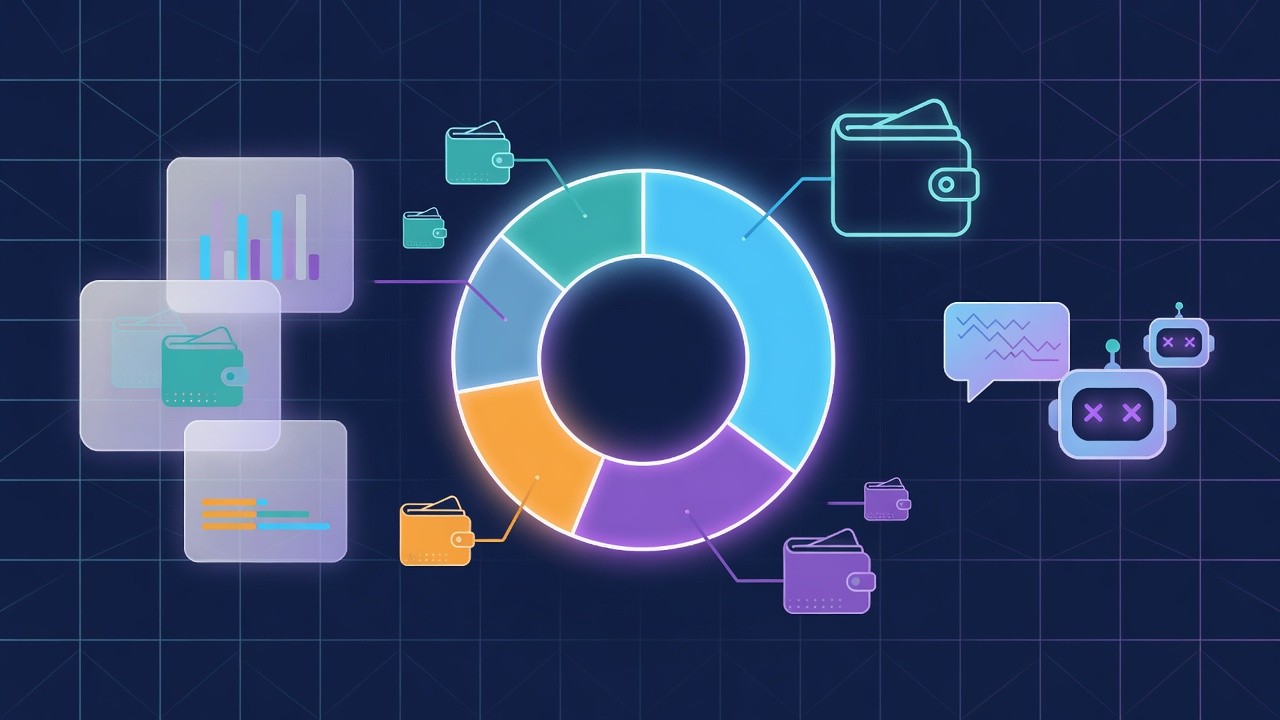
How to check holder distribution for beginners is simple: open a token page, find the holders or top wallets list, measure how much supply sits in the top few addresses, then compare that concentration to liquidity before you buy. If a handful of wallets can move price against you, a green candle on Telegram is not a thesis. This is educational risk literacy, not financial advice. You can lose everything you put at risk. Nothing here promises returns.
If you trade from Telegram with tools like Banana Gun, Trojan, BonkBot, BullX, or Photon, treat holder checks as a pre-trade step, then shortlist bots by job fit on rankings and categories.
What Holder Distribution Actually Means
Holder distribution answers one practical question: who owns how much of the token?
| Term | Plain meaning |
|---|---|
| Holder | A wallet address that currently holds the token |
| Top holders | The largest wallets by balance (often top 10 or top 20) |
| Concentration | How skewed ownership is toward a few addresses |
| Circulating vs locked | Whether big bags can sell freely, sit in LPs, or claim to be locked |
| Cluster | Multiple wallets that may act as one actor (harder to spot) |
Beginners often fixate on "number of holders." That number is weak alone. Distribution quality (who holds how much, and can they sell) matters more than a vanity holder count.
Why Beginners Should Check Before Any Bot Buy
Telegram trading and sniper bots compress the path from "saw a chart" to "order sent." Speed is useful. It also skips homework.
Holder distribution helps you spot:
- Dump risk from team, insider, or early sniper bags
- Exit risk when thin liquidity meets large sellable supply
- Fake community optics when holder count is high but ownership is not
- Bot farm noise when many tiny wallets sit under a few whales
It does not prove a token is good. Clean-looking holders can still fail. Bad-looking holders can still pump. Your job is to avoid the worst setups and size smaller when the picture is messy.
A 5 Step Holder Check Anyone Can Run
Use this same loop whether the token is on Solana, Ethereum, Base, or another chain. Tool names differ. The questions stay the same.
Step 1. Get The Exact Token Address
Never search by ticker alone. Tickers collide. Scammers clone names.
- Copy the mint / contract address from a source you trust enough to verify twice (official site if real, or the chart link you already opened).
- Paste that address into an explorer or analytics site for the right chain.
- Confirm the name, symbol, and chain match what you expected.
If the address does not match, stop. Do not "fix" it with a bigger size in a bot.
Step 2. Open The Holders Or Top Wallets View
On most free tools you will find one of:
- Holders tab on a block explorer token page
- Top holders on a DEX / token analytics dashboard
- A pie chart or % bar showing top wallet share
You do not need paid software for a beginner pass. You need the top list and total supply context.
Step 3. Read The Top 10 Like A Risk Map
Write down (or screenshot):
- % held by wallet #1 (excluding known burn addresses if labeled)
- % held by top 5
- % held by top 10
- Whether any top wallet is labeled pool / LP / router / bridge / exchange
- Whether large bags look fresh (just bought) or dormant
| Pattern | Beginner read | What to do |
|---|---|---|
| Top wallet is labeled LP / pool | Often normal | Still check pool size vs your trade size |
| Top 5 hold a huge free float | High dump sensitivity | Size tiny or skip |
| Many mid-size bags, no single whale | Cleaner optics | Still check liquidity and contract risks |
| Lots of identical-size wallets | Possible clustering | Treat as higher uncertainty |
| Huge "team" bag with no lock story | Trust tax | Assume it can sell |
There is no universal safe %. A 12% top wallet in deep liquidity is a different animal from a 12% top wallet in a paper-thin pool.
Step 4. Pair Holders With Liquidity And Age
Holder distribution without liquidity is incomplete.
Ask:
- Can those top bags sell through the pool without nuking price?
- How old is the token and the pool? Brand-new charts with whale bags are common sniper leftovers.
- Is "locked liquidity" claimed, and can you verify the lock? Claims in chat are not locks.
If top holders are large and the pool is small, you are not "early to community." You may be exit liquidity.
Step 5. Decide Size Or Skip Before You Touch The Bot
Only after the holder + liquidity pass:
- Pick max loss you can accept (often a dust unit for experiments).
- Open the official Telegram bot handle (not a lookalike).
- Paste the same contract address.
- Set slippage and size conservatively.
- Prefer a burner wallet with risk capital only.
Bots execute. They do not replace judgment. Compare products on rankings after you know what job you need (snipe, limit, copy, alerts).
Free Places Beginners Usually Look
Exact UIs change. The skill is knowing what screen you need.
| Need | Where people look | What you extract |
|---|---|---|
| Raw holder list | Chain explorers (token → holders) | Top addresses and balances |
| Fast top-10 % view | Token analytics / chart sites | Concentration snapshot |
| LP context | Pool page on the same analytics stack | Liquidity depth vs market story |
| Bot execution | Telegram trading bots | Buy/sell after you already decided |
For Solana memecoin flow, many retail users chart on tools like Birdeye or DexScreener-style UIs, then execute in Telegram bots such as Banana Gun or Trojan. For multi-chain sniper workflows, products like Maestro show up often. Whatever stack you use, verify the address on an explorer at least once before size that hurts.
What "Good" Vs "Bad" Looks Like In Practice
Avoid fake precision. Use comparative language.
Higher Risk Signals
- One or two wallets control a large share of sellable supply
- Top holders are unlabeled EOAs (normal wallets) with huge bags on a brand-new mint
- Holder count is marketed hard while top 10 dominate
- Top wallets all bought in the same narrow time window
- Liquidity is low relative to the size of the top bags
- Chat says "community owned" while explorers show otherwise
Lower Stress Signals (Still Not Safety)
- Ownership is less top-heavy after excluding LP / burn / known infrastructure
- Large labeled pools exist and you can estimate exit depth
- Token has enough history that pure launch sniper bags are not the whole story
- No single wallet can obviously overwhelm the pool at your intended size
"Lower stress" is not "safe." Contracts, taxes, freezes, oracle games, and social scams sit outside the pure holder chart.
Common Beginner Mistakes
Mistake 1. Counting Holders Instead Of Reading Tops
10,000 holders with 70% in five wallets is not decentralized ownership. It is a crowded exit path under whales.
Mistake 2. Ignoring LP Wallets In The List
If you panic because "wallet #1 has 40%" and wallet #1 is the liquidity pool, you misread the page. Label first, then judge free float.
Mistake 3. Treating Exchanges Or Bridges As Team Bags
On more established tokens, CEX or bridge addresses can appear large. On brand-new memecoins, that misread is less common than LP confusion, but the habit still matters: identify the address type.
Mistake 4. Checking Once, Then FOMO-Buying Minutes Later
Distribution changes. Early snipers rotate. New wallets appear. If size is non-trivial, refresh holders and liquidity close to entry.
Mistake 5. Letting The Bot UI Skip The Check
A snipe button is not a holder report. Some bots show safety badges. Badges lag, get gamed, or omit context. Use them as a secondary hint.
Mistake 6. Searching Ticker Names In Random Google Results
Cloned contracts and phishing sites love ticker search traffic. Start from the address when you can.
Holder Distribution Plus Telegram Bots
Here is a practical split of jobs:
| Job | Tool type | Holder check role |
|---|---|---|
| Research concentration | Explorer / analytics | Primary |
| Chart and pool depth | Chart sites | Primary with holders |
| Fast buy/sell | Telegram trading bot | After research |
| Alerts | Tracker bots | Optional notify, not diligence |
| Compare products | TGBot rankings | Choose execution UX, fees, chain fit |
If your edge is "I click faster," you still need a filter for "I should not click this." Holder distribution is one of the cheapest filters that exist.
Related risk context for meme-heavy Solana flow: read our beginner guide to Solana memecoins risks before you size up snipes.
Simple Pre-Trade Checklist (Copy This)
Use this before any non-dust buy:
- Address verified (not ticker-only)
- Top 10 holders reviewed (labels noted)
- Top free-float bags estimated (ex LP / burn when clear)
- Liquidity size vs those bags (can they dump through me?)
- Token age / pool age checked at a glance
- Max loss set before opening Telegram
- Official bot only + burner wallet + small first size
- No seed phrase ever shared with a bot chat
If you cannot complete steps 1-4, you are guessing. Guessing is allowed only with money you accept losing.
Bottom Line
Learning how to check holder distribution for beginners is not about finding a magic percentage. It is about refusing to fund a trade when a few wallets plus thin liquidity make you the exit. Read top holders, label LP and infrastructure wallets, pair concentration with pool depth, then size for survival. Telegram bots are for execution after that pass, not instead of it. Compare tools on rankings and categories when you know the job. Not financial advice. Trading can result in total loss of capital.
Not financial advice. Trading involves risk of loss.
FAQ
- What does holder distribution mean in crypto?
- Holder distribution shows how a token's supply is split across wallets. You care most about whether a few addresses control a large share that can dump into thin liquidity.
- How do beginners check holder distribution before buying?
- Open a block explorer or token analytics page, find the holders or top wallets list, note the top 10 share, and compare that to liquidity size. Do this before you size up in any Telegram trading bot.
- What is a bad holder distribution for memecoins?
- There is no single safe percentage, but extreme top-wallet concentration plus thin liquidity is a classic dump risk. Also watch for clustered wallets that look like one actor split across many addresses.
- Does a high holder count mean a token is safe?
- No. Thousands of tiny wallets can sit under a few large holders. Count without concentration is weak comfort. Always read top holders and liquidity together.
- Can Telegram sniper bots check holder distribution for me?
- Some tools surface holder or safety snippets, but bots are execution tools first. Treat any in-chat score as a hint, not proof. Verify on an explorer before you risk size you care about.
- Is checking holders financial advice?
- No. Holder checks are risk literacy. They do not guarantee profits, prevent rugs, or make a token safe. You can still lose the full amount you put at risk.
Not financial advice. Crypto trading can lose money. TGBot rankings are research aids, not guarantees. Always verify official bot links and never share your seed phrase.