Copy Trading Risks For Beginners On Telegram Bots
Copy trading risks for beginners: lag, slippage, leader bias, fees, scams, and sizing rules when mirroring wallets with Telegram trading bots.
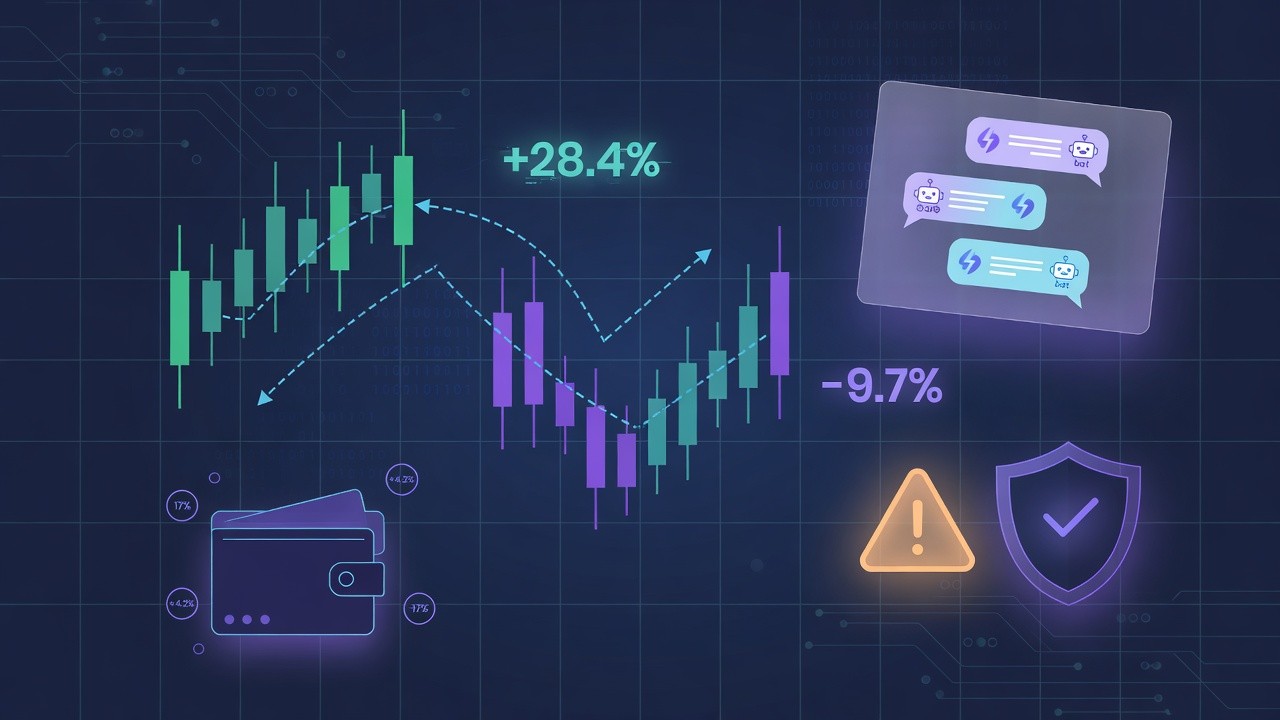
Copy trading risks for beginners are mostly about who you follow, when your bot fills, and how much you size, not about missing a secret "smart money" list. Mirroring a wallet on a Telegram trading bot can feel passive, but you still take market risk, fee drag, bad fills, tool risk, and social engineering risk. This guide is educational, not financial advice. You can lose the full amount you fund. Nothing here promises returns or "safe" copy setups.
If you are shortlisting tools such as TradeWiz, GMGN, Trojan, Maestro, Banana Gun, Bloom Bot, or Sigma Bot, learn the risk map first, then compare by job fit on rankings and categories.
Who This Guide Is For
This is for retail beginners who:
- Just discovered wallet copy / "follow smart money" features inside a Telegram bot.
- Are tempted by screenshot P&L threads that say copying is easier than learning charts.
- Already funded a bot wallet and want a plain checklist before turning copy on at full size.
This is not a leaderboard of wallets to mirror, not a "set and forget income" pitch, and not a claim that any bot removes risk.
What Copy Trading Means On Telegram Bots
In crypto Telegram tooling, copy trading usually means:
- You fund a bot-controlled trading wallet (or connect a limited key path).
- You pick one or more leader wallets (or a feed of "smart money" addresses).
- When the leader buys or sells, your bot tries to mirror with your size, slippage, tip, and filter settings.
That is different from:
| Mode | What happens | Beginner trap |
|---|---|---|
| Copy trading | Bot mirrors on-chain leader activity | You buy late and still feel "safe" because a wallet "is winning" |
| Signal group | Human or channel posts a call; you click | FOMO spam, paid shills, delayed entries |
| Manual bot trading | You paste contracts and press buy/sell | You own every decision; no leader lag story |
| Sniper / launch tools | Bot races new pools | Different skill; copy is not a sniper substitute |
Copy is an execution shortcut, not a risk-free strategy.
The Main Copy Trading Risks For Beginners
1. Lag, Slippage, And "Worse Than Leader" Fills
Leaders often get better prices because they:
- Enter earlier (your bot only sees their tx after it is public).
- Use better tip / priority settings or private routing in some stacks.
- Trade sizes that fit the pool better than a pile of followers stacking the same buy.
You can copy a green leader chart and still print red if every follower hits the same thin pool a few seconds later. Slippage caps, max buy size, and "skip if price moved more than X%" filters matter more than the leader's Twitter vibe.
2. Survivorship Bias And Fake Leader Stories
Public "wallet of the month" lists and P&L screenshots favor winners that are still visible. Losers delete chats, rotate wallets, or stop posting. A wallet that 10x'd once may be:
- Farming followers as exit liquidity.
- Running one hot meme style that already cooled.
- Showing selective history (wins only).
- A bot farm with wash-looking activity.
Beginner mistake: treating a leader's past curve as a forecast for your next thirty days.
3. Crowded Followers And Leader Dump Risk
When many bots copy the same address, the leader's next sell can be your liquidity. Even without malice, a leader scaling out into thin depth leaves late copies holding bags. With malice, "alpha wallets" that bait copy products are a known social pattern.
Practical habit: prefer fewer leaders, smaller size, and hard max position rules over "copy the top 20 wallets at once."
4. Fee Drag On Small Accounts
Copy setups often stack costs:
- Bot fee per trade (commonly around the ~1% class on many Telegram bots; confirm in-app).
- Network fees and priority tips.
- Spread and slippage on both entry and exit.
- Failed or partial fills you retry with worse settings.
A leader can look profitable while a small follower account bleeds on fees alone if it over-trades. Size and trade count are risk controls, not afterthoughts.
5. Tool, Wallet, And Clone-Bot Risk
Copy features live inside products that hold funds or keys with real attack history in the broader Telegram bot space. Separately, lookalike bots and phishing links try to steal deposits.
Hard rules for beginners:
- Never paste a seed phrase into a chat "to enable copy."
- Use a burner wallet with only risk capital.
- Open bots from official site docs or known handles, not random DMs.
- Dust-test copy with tiny size before full allocation.
- Prefer products you can name and verify on editorial pages such as TradeWiz or GMGN, then re-check live links yourself.
6. Settings Risk: Silent Over-Trading
Copy UIs can leave you overexposed if you mis-set:
| Setting | Beginner failure mode | Safer default mindset |
|---|---|---|
| Per-trade size | Fixed huge $ per every leader buy | Tiny fixed risk unit; cap total exposure |
| Max open positions | Unlimited mirrors | Hard cap so one hot leader cannot empty you |
| Slippage | Max "so it always fills" | Lower size first; do not buy any price |
| Blacklist / filters | None | Skip mints with freeze authority issues, honeypot flags, or tiny liquidity when the product offers checks |
| Multi-leader | Copy everyone | Start with one leader and learn fill quality |
Automation does not mean "no decisions." It means your decisions were made before the next trade hits.
7. Psychological Risk: Passive FOMO
Copy trading feels like outsourcing skill. That comfort leads people to fund larger than they would for a manual degen buy. When the account drops, they disable copy at the bottom and re-enable after a green day. That loop is still discretionary risk with extra steps.
If you cannot explain why a leader's style matches your bankroll and time horizon, you are renting someone else's aggression.
Copy Trading Vs Signals Vs Manual (Quick Compare)
| Factor | Copy trading | Telegram signals | Manual bot trades |
|---|---|---|---|
| Who times entry | Leader wallet | Caller / channel | You |
| Main delay risk | On-chain lag + bot queue | Message lag + your click speed | Your research speed |
| Social scam vector | Fake "smart money" lists, clone bots | Paid groups, screenshot theater | Phishing links, fake bot names |
| Fee sensitivity | High if high frequency | Medium | Depends on your trade rate |
| Best beginner use | Tiny experiments while learning tools | Education + skepticism | Learning execution controls |
| Worst beginner use | Full bankroll on one viral wallet | Blind auto-buy every call | YOLO size with no plan |
For product browsing by category, start at categories and the site rankings, then open individual bot pages before funding.
A Practical Beginner Checklist (Before You Mirror)
- Define risk capital in fiat terms you can lose completely. Fund only that.
- Burner wallet only. Keep long-term holdings elsewhere.
- Verify the bot (official site, handle, docs). Cross-check editorial notes on pages like Trojan, Maestro, or Banana Gun, including any public security history mentioned there.
- One leader first. Write why you chose them (style, chain, size, not "they are green today").
- Cap size: max per trade, max open risk, max daily loss. Write numbers down before enabling copy.
- Set slippage and skip rules so a thin pool cannot fill you at a disaster price.
- Dust-test for a day. Compare your fills to the leader's prices. If the gap is ugly, fix settings or stop.
- Log fees for a week. If fees dominate, lower frequency or pause.
- Never chase a leader after a huge public win thread; crowded entries are often worse.
- Plan the off switch: if max daily loss hits, copy stays off until you review settings calmly.
How To Use TGBot When Evaluating Copy Tools
TGBot is for Telegram bot literacy and comparison, not for promising a winning leader list.
Use the site like this:
- Scan rankings for job fit (copy, sniper, multi-chain trading).
- Open categories and focus on copy-oriented products when that is your actual job.
- Read product pages for real bots you might use, for example TradeWiz (copy-speed reputation on Solana), GMGN (research + copy workflow), Bloom Bot, or multi-tool stacks like Sigma Bot.
- Confirm fees, chains, and official links inside the live product before you send size.
- Treat editorial scores as opinionated shortlists, not performance guarantees.
If your real goal is building a full multi-venue strategy system rather than Telegram execution tools, that is a different product job. Stay on the bot-comparison path when your question is "which Telegram tool and what can go wrong."
Common Beginner Mistakes (And Cleaner Defaults)
| Mistake | What usually happens | Cleaner default |
|---|---|---|
| Copying 10+ wallets day one | Overlapping buys, fee spam, chaos | One wallet, one chain, small size |
| Max slippage "for fills" | Paying panic prices | Smaller size + skip-if-moved filters |
| Funding the bot from main stack | Blast radius if anything fails | Burner only |
| Trusting P&L screenshots | Survivorship and editing | Assume marketing until proven |
| No max loss rule | Death by a thousand mirrors | Daily and total hard stops |
| Ignoring public bot incidents | Repeatable opsec failures | Read history notes; size for tool risk |
| Turning copy off only after a crash | Emotional timing | Pre-written pause rules |
Bottom Line
Copy trading risks for beginners cluster around late fills, biased leaders, crowded followers, fees, tool/scam risk, and oversized "passive" positions. Telegram bots make mirroring easy; they do not make outcomes safe. Start tiny, verify official tools, cap risk in writing, and measure your actual fills against the leader before you scale. Shortlist honestly on rankings and categories, then treat every funded wallet as risk capital.
Not financial advice. Trading crypto with bots can result in total loss of funds you allocate.
Not financial advice. Trading involves risk of loss.
FAQ
- What are the main copy trading risks for beginners?
- The biggest ones are execution lag and slippage, following leaders who already took size, survivorship bias in shared P&L screenshots, bot fees eating small accounts, clone-bot scams, and sizing too large because the UI makes mirroring feel passive.
- Is copy trading safer than picking trades yourself?
- Not automatically. You outsource entry timing but keep market risk, fees, bad fills, and tool risk. If the leader is lucky, over-levered, or dumping into followers, you can still lose the full amount you put at risk.
- Why do I get worse prices than the wallet I copy?
- Leaders often enter earlier with better liquidity and gas. Your bot reacts after their tx is public, so you buy higher or sell lower. Tips, bot fees, and slippage settings widen that gap further.
- Should beginners copy trade with a main wallet?
- No. Use a dedicated burner wallet with only risk capital, fund only what you can lose, verify official bot handles, never share a seed phrase, and dust-test copy settings before scaling.
- How is Telegram copy trading different from signal groups?
- Copy trading mirrors on-chain wallet activity with automation. Signal groups push human or semi-auto alerts you still execute. Both can scam or underperform; copy adds latency and silent over-trading risks.
- Where should I compare Telegram copy trading bots?
- Shortlist by job fit on TGBot rankings and the copy-trading category, then open product pages for tools like TradeWiz, GMGN, Trojan, Maestro, or Banana Gun and confirm fees, chains, and official links in the live bot before funding.
Not financial advice. Crypto trading can lose money. TGBot rankings are research aids, not guarantees. Always verify official bot links and never share your seed phrase.